
Creativity, AI, Brian Eno…and farming?
For the bulk of my life, I've lived on my family's farm in Nebraska. I'm in my office right now (which is located in my grandparents' old farmhouse), looking out the window at fields my family farmed, and the buildings that they worked in.
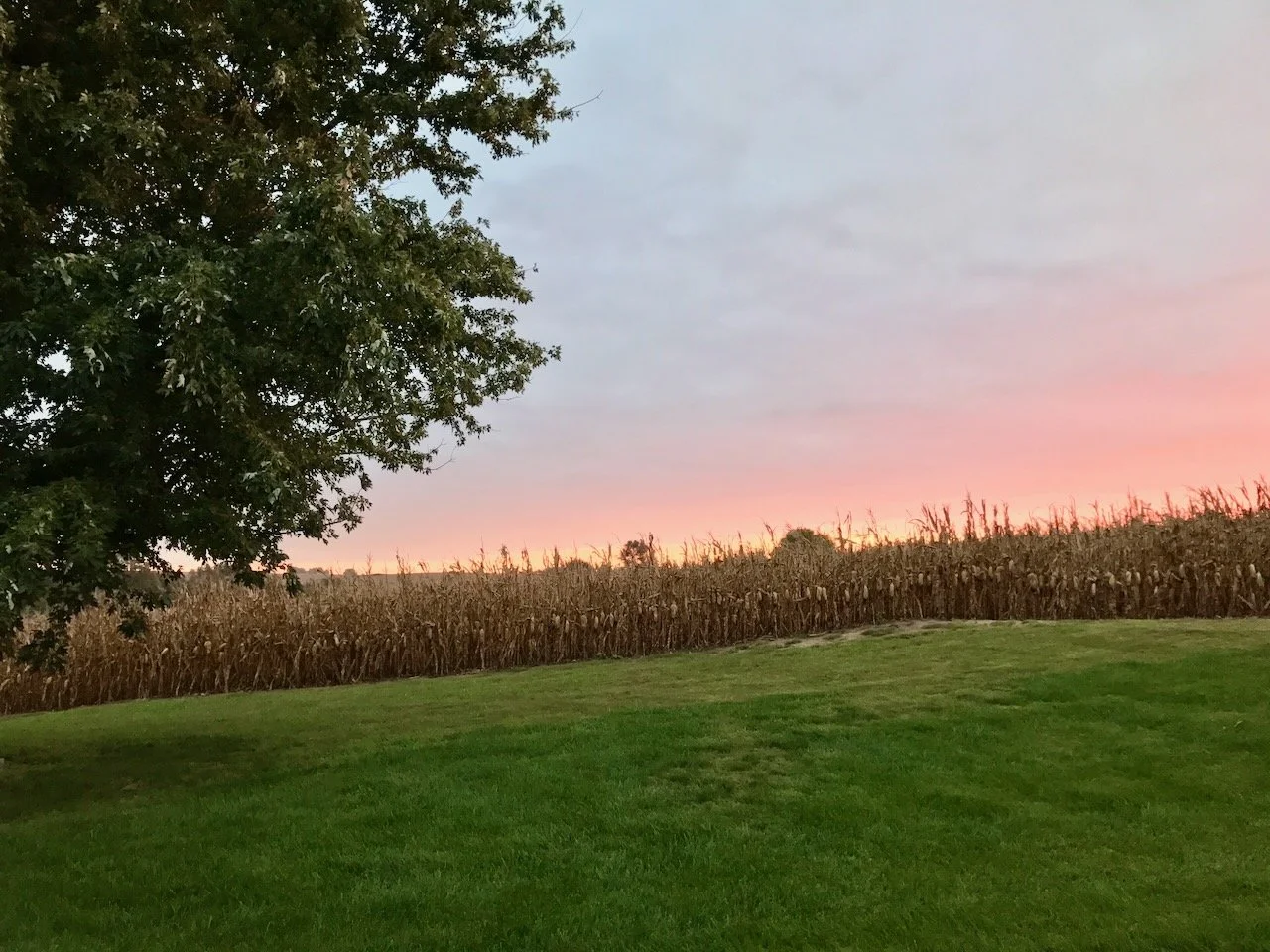
My family’s farm in Nebraska
The craft of farming
I'm not a farmer, but my dad and my grandfather were (both grandfathers, actually). For them, the spring meant hard work preparing fields fertilizing, and planting. The summer meant insect and weed control, sometimes cultivating, and irrigating. The fall mean long hours of harvest, followed by a winter of grain drying, marketing, days of hauling away the sold or stored crop, preparing the field for next year with tilling and fertilizer, and year-end bookkeeping. Then the process would begin all over again. Ultimately, the seeds went in the ground in the spring and they were harvested as crops in the fall.
My grandpa and dad are both gone now, but the farm actively continues despite numerous changes: a new farmer, encroachment by urban development, changing weather patterns, new seed science, no-till and minimum till methods for conservation, better fertilizers and pesticides, modern farm equipment technology, and much more. With all that change, when you get right down to it, the seeds still go in the ground in the spring, and they are harvested as crops in the fall.
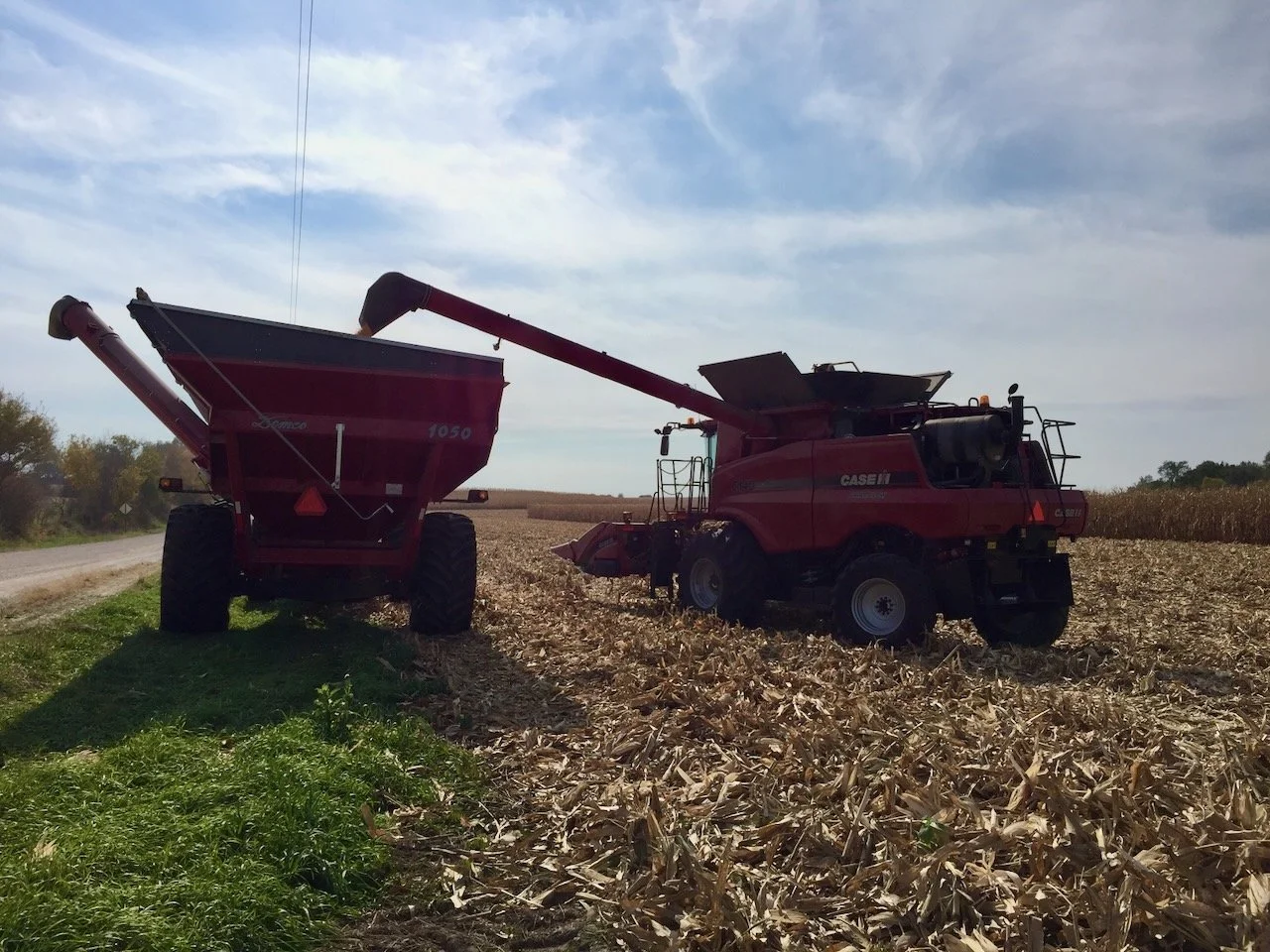
Corn harvest in Nebraska
Does innovation kill craft?
Are modern farmers still farmers, even though things are now so advanced that with the right tech you can set your rows, then virtually let the equipment operate itself? Where's the craft in that? The skill?
For one, that's an oversimplification. Modern farmers still work long, hard hours for very thin margins. All the bookkeeping, grain marketing, knowing when to spray and fertilize, and much more, is still there. Farming also requires some tech knowledge, biology, and conservation science. Ultimately, the seed's still going in the ground in spring, and in the fall it goes to market as a crop. That's farming. Modern farmers are farmers.
In many ways, even though my dad and grandpa were smart, skilled, capable farmers, the yields produced today are far larger than what they ever achieved. This is not because their skill was lacking, but because the technology, methods, science, and conditions for success have changed and improved. Again, this is an oversimplification, but a novice farmer with today's technology, equipment, and science, would likely achieve a better result in the field that my dad used to. But if my dad had all of today's modern farming tools and technology, along with the know-how to implement them, he would likely achieve even better results.
Growing creativity
This got me thinking about Brian Eno. You may ask yourself, what's Brian Eno got to do with farming? Eno is an acclaimed musical artist and producer, but he'll tell you that he doesn't really consider himself a musician. In fact, he's kind of a music farmer.
Eno popularized the term generative music in the 1990s, long before ChatGPT breathed its first metaphorical breath. For Eno, this referred to systems and processes put in place by a creator, that could evolve and change in numerous ways based on context, conditions, settings, and other influences.
He likened it to a gardener or a farmer planting seeds: You plant the seeds, giving them what they need to grow and thrive. The grower doesn't quite know how that plant will turn out, but with enough experience and preparation, they have a good idea.
Volunteer corn
Every year around the farm, we get what's known as volunteer corn. It pops up in the most random places, and if you don't cut it down, it just grows. It comes from random kernel of corn that dropped out of the combine or grain truck as it was passing by, or from a bird or raccoon that carried it from the field and dropped it in a random spot. Nothing was actively done to fertilize or to prepare the soil for it. Sometimes it will produce ears, sometimes it won't. It's growing in a place where it's much more likely to be mowed down than be harvested.
It found what it needed in the soil it was sitting on, and it turned itself into a stalk of randomly placed, sub-optimal, corn.
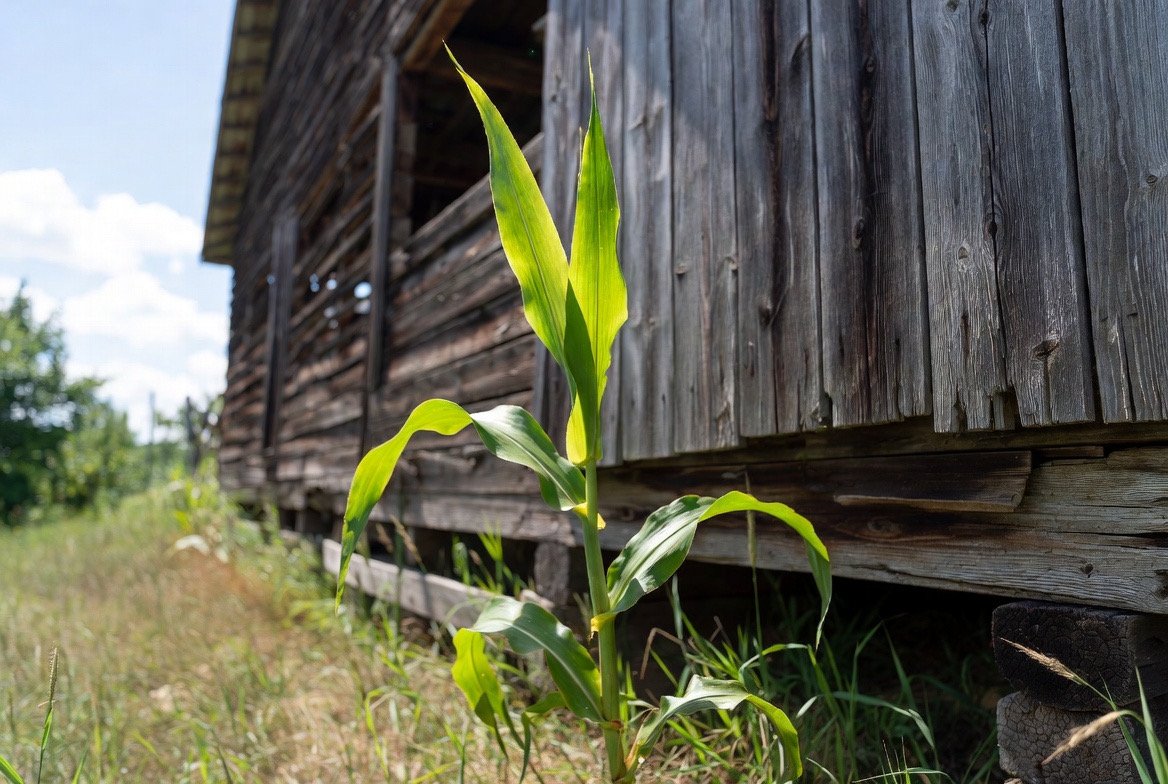
A stalk of volunteer corn next to an old farm building
Surface-level AI prompting
There's something similar to be considered with generative AI. If you drop a quick question or sentence into Google Gemini — or heck, even if you accidentally pasted something into Gemini's chat window and then stumbled on the Enter key, it will give you something back. That something might look like a proper answer, or a proper blog post, or a proper video.
When you look deeper, you'll see that, in many cases, it's missing something. To mix my metaphors, it looks like a stalk of corn, and is a stalk of corn, but it doesn't have everything that the intentional, cared for corn across the road in the field has.
Improving your yield
If you were to take interest in that stalk of corn, actively give it fertilizer, moisture, pest control, you'd likely have some success with it. The same goes for your random AI generation. If you went back with a follow-up prompt that gave it more context or more guidance, then worked with it over subsequent prompts, or simply took the result out of Gemini and completed the work yourself, you would probably get something useful and worthwhile.
In an interview Eno did last year with Baratunde Thurston, they concluded by chatting with an AI chatbot about Eno's Oblique Strategies cards. This is a tool Eno developed in the 1970s to help "prompt" creative ideas. I'll talk about those again in the future.
During the AI chat, the first Oblique Strategies ideas the AI tool came up with were fairly similar to the actual ideas on the original set of cards. They gave the AI chatbot a second round of prompting with more specific instructions, encouraging it to look for new ideas. What it came back with the second time was not perfect, but better. Eno said that it gave him some things he hadn't considered or had to think more about.
It would have been fascinating to see what would have come if they'd kept refining their prompts, but Eno went off to play with a dog.
The harvest: conclusions and takeaways
If I were to draw some conclusions from all this, here's what they would be:
We don't make stuff in a vacuum.
Creation, whether it's biologically or technologically generated, grows and takes shape as a result of its context, environment, and care. No matter who or what is involved in the process, these things seem to be true:
1. Everything we make is influenced, for better or worse, by our environment, our contexts, and our constraints.
2. Better inputs generally equal better outputs. This tends to be true of everything in life.
3. Outputs can be improved with continued refinement and more better inputs (loving that I'm actually publishing something with the phrase "more better" in it. Take that, English teachers.).
Skill is key, but not everything
A skilled, experienced craftsperson should be able to use AI to achieve better, more "human" work than a novice. Likewise, a person skilled in one area should be able to use AI to help them achieve more in supporting areas where they're less skilled. This is what I call the bailing wire theory. More on that in a future post.
It could also be true that a novice could achieve really good work using generative AI — particularly as tech improves and models get more capable. Who knows? That achievement might start the novice down a new path of learning, discovery, and skill in something entirely new. Not knowing what you don't know can open a whole lot of new doors.